
"Grain shape"
700 article(s) found

Yunnan small coffee beans are not imported Tiebika round beans are public beans delicious? what are Yunnan small round beans?
Professional coffee knowledge exchange more coffee bean information please follow the coffee workshop (Wechat official account cafe_style) Yunnan small round beans warm and balanced, mellow and rich Yunnan small round beans roasted mellow, so that the neighborhood like Yunnan small round beans, Chinese high-quality coffee. The first time I made Yunnan coffee beans seriously was on a dark and rainy morning.

Where to sell coffee in Baoshan _ the development status of Baoshan small-grain coffee industry _ where is there coffee in Baoshan, Yunnan?
Professional coffee knowledge exchange more coffee bean information please follow Coffee Workshop (Wechat official account cafe_style) Yunnan, as a major agricultural province in China, has unique geographical and climatic advantages, and there are countless small resources on Yunnan land. What the editor wants to introduce to you today is coffee, a small resource product that has nothing to do with Yunnan at first glance. Yunnan small grain coffee

Cultivation techniques of small-grain Coffee in Yunnan Province: disease Control
1. Coffee rust is the main disease of coffee, the most harmful, the damaged plants, light reduced yield, serious death. Coffee rust is mainly harmful to leaves and sometimes to young fruits and twigs. After the leaves were infected, many light yellow spots appeared at first and enlarged in the form of water stains, followed by orange-yellow powdery spores on the back of the leaves, and there was a light green halo around the disease spots, which gradually expanded or connected in the later stage.

Introduction to the characteristics of washed Yunnan small Coffee beans Baoshan Iron pickup Coffee beans
Professional coffee knowledge exchange more coffee bean information please pay attention to the coffee workshop (Wechat official account cafe_style) pure blood washing Yunnan small coffee beans Baoshan Tiebika taste? How does Yunnan taste? Based on some basic factors to judge whether a bean will taste good, nothing more than the following: look at beans: 1. Variety 2. Altitude 3. Treatment mode 4. Bake 5. Extract

Types and varieties of coffee
Coffee is a plant of the genus Coffea genus of Rubiaceae. According to the study of Chevalier,1947, there are 66 species in four groups, including 24 species in Eucoffea group, 18 species in Mascarocoffea group, 13 species in Paracoffea group and 11 species in Argocoffea group.

Kilimanjaro Kilimanjaro coffee is of good quality, rich aroma and sour taste.
Kilimanjaro Coffee (Kilikmanjaro Coffee) is produced in Mount Kilimanjaro, the highest mountain in Africa in northeastern Tanzania. Its coffee is of good quality, rich aroma and outstanding sour taste, so it is suitable for the preparation of comprehensive coffee. Kilimanjaro coffee is an important lifeline of the Tanzanian economy. About 17% of the foreign exchange is created by coffee, which is mainly produced.
Types and varieties of coffee
Coffee is a plant belonging to the genus Coffea in the Rubiaceae family. According to Chevalier (1947), the genus Coffea is divided into four groups with 66 species, including 24 species in Eucoffea group, 18 species in Mascarocoffea group, 13 species in Paracoffea group and 11 species in Argocoffea group

What is the best quality of Yunnan coffee beans? introduction to the taste and flavor of Yunnan iron truck coffee beans
Professional coffee knowledge exchange more coffee bean information Please follow the coffee workshop (Wechat official account cafe_style) Qianjie-Yunnan Coffee varieties introduction small grain coffee is suitable for growing in the mountains at an altitude of 800m to 1800m, if the altitude is too high, it will taste sour, and if it is too low, it will taste bitter. Small grains of coffee are mostly planted in dry and hot valleys about 1100 meters above sea level, so they are moderately sour, rich and mellow.

Which brand of Yunnan small grain coffee has a good flavor and taste and the price is produced in the area manor introduction
Yunnan Blue three Coffee Blue Mountain Coffee processing process is also very exquisite. There are strict and detailed standards for processing, baking, packaging, etc., even to what kind of organic fertilizers are needed during the growth period. It is harvested entirely by hand, and in terms of transportation, Jamaica is the last country to still use traditional wooden barrels to transport coffee. And what's even more special is that every barrel has a
What are pea-shaped coffee beans? The basic knowledge of boutique coffee beans
What are pea-shaped coffee beans? Pea-shaped coffee beans (also known as Caracol) are small, round, bean-shaped fruits, usually shaped in two halves, but this bean is a whole, growing in the center of the coffee fruit. Pea coffee beans are usually separated from ordinary beans and sold as distinct coffee beans. They are popular in Japan at high prices.

Coffee tree history coffee morphological characteristics coffee cultivation techniques
Coffee tree is a shrub or small tree of Rubiaceae; leaves opposite, leathery, long oval; every March, branches will emerge white flowers, petals spiral arrangement, flower center around the petals jump, a closer look, really like childhood play with the small windmill, issued bursts of jasmine fragrance; fruit is oval, berry, dark red, hidden two seeds, that is, we are familiar with coffee

Refreshing Yemeni coffee flavor, characteristics, taste and manor
Yemeni coffee originated from Arabian coffee trees hundreds of years ago, all produced in areas above 3000 feet above sea level. For hundreds of years, the unique planting and production methods of Yemeni coffee have remained almost unchanged. The seedlings of Yemeni coffee trees are first cultivated in nurseries and then transplanted to high elevations. Pesticides and fertilizers are not used in the breeding process. Mature coffee beans are naturally dried on coffee trees and shelled by stone grinding.

The latest introduction of Yemeni coffee boutique coffee
Yemeni coffee originated from Arabian coffee trees hundreds of years ago, all of which are produced in areas above 3000 feet above sea level. For hundreds of years, the unique planting and production methods of Yemeni coffee have remained almost unchanged. The seedlings of Yemeni coffee trees are first cultivated in nurseries and then transplanted to high elevations. Pesticides and fertilizers are not used in the breeding process. Mature coffee beans are naturally dried on coffee trees and shelled by stone mill.
Tiebikadi, Katie, pickup, iron pickup.
Typica (Typica) is the species name of coffee beans, and it is one of the oldest varieties of Arabica. Iron pickup, also known as the old variety of small-grain coffee, its yield is less, cultivation is difficult, so the price is much higher than ordinary small-grain coffee. Tibica coffee is native to Ethiopia.

An introduction to the planting environment in which coffee trees can grow coffee beans for several years.
Coffee tree can grow how coffee beans grow in several years the planting environment introduces that coffee tree is a shrub or small tree of Rubiaceae; leaves opposite, leathery, long ovate; every March, the branches will appear white flowers, petals spirally arranged, the heart jumps around the petals, take a closer look, it is really like a small windmill playing in childhood, emitting bursts of jasmine fragrance; the fruit is oval

Three steps to buy coffee beans
1. Grab a handful of coffee beans and feel whether they are solid beans with the palm of your hand. 2. Whether it is enough to smell the aroma close to the nose. 3. Put a bean into your mouth and bite it twice. There is a clear sound indicating that the bean is well preserved and not damp. If you want to buy a single product of coffee beans, grab one in the palm of your hand, in addition to the above judgment, but also take a look at the color of each bean.

Yemeni coffee flavor Yemeni coffee characteristics Yemeni coffee taste
Yemeni coffee originated from Arabian coffee trees hundreds of years ago, all produced in areas above 3000 feet above sea level. For hundreds of years, the unique planting and production methods of Yemeni coffee have remained almost unchanged. The seedlings of Yemeni coffee trees are first cultivated in nurseries and then transplanted to high elevations. Pesticides and fertilizers are not used in the breeding process. Mature coffee beans are naturally dried on coffee trees and shelled by stone grinding.
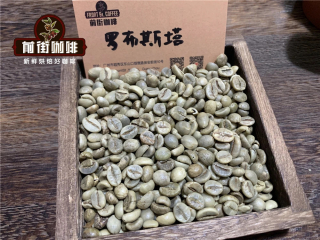
A brief introduction to the description of the flavor, taste and aroma characteristics of robusta coffee beans why the harm of robusta beans is notorious
Its flavor is so bright and strong, but if you want to taste it directly, you have to be prepared. In general, robusta coffee is used in instant coffee (which extracts about twice as much liquid as Arabica), canned coffee, liquid coffee and other industrial coffees. The content of caffeine is much higher than that of A.

Four selection factors of hand-punching filter cup: material, flow rate, filter medium and filter cup size
Communication of professional baristas Please pay attention to the coffee workshop (Wechat official account cafe_style) hand-flushed filter cup, which is one of the most important factors that determine the presentation of hand-made flavor. But when we pick the player to flush the filter cup, where do we start? What are the points for attention? This time we will make a comprehensive analysis of the material, flow rate, filter media and filter cup size, so that you can select the most
Introduction of Coffee Tree species
Typica (Typica) is the species name of coffee beans, and it is one of the oldest varieties of Arabica. Iron pickup, also known as the old variety of small-grain coffee, its yield is less, cultivation is difficult, so the price is much higher than ordinary small-grain coffee. Tibica coffee is native to Ethiopia.